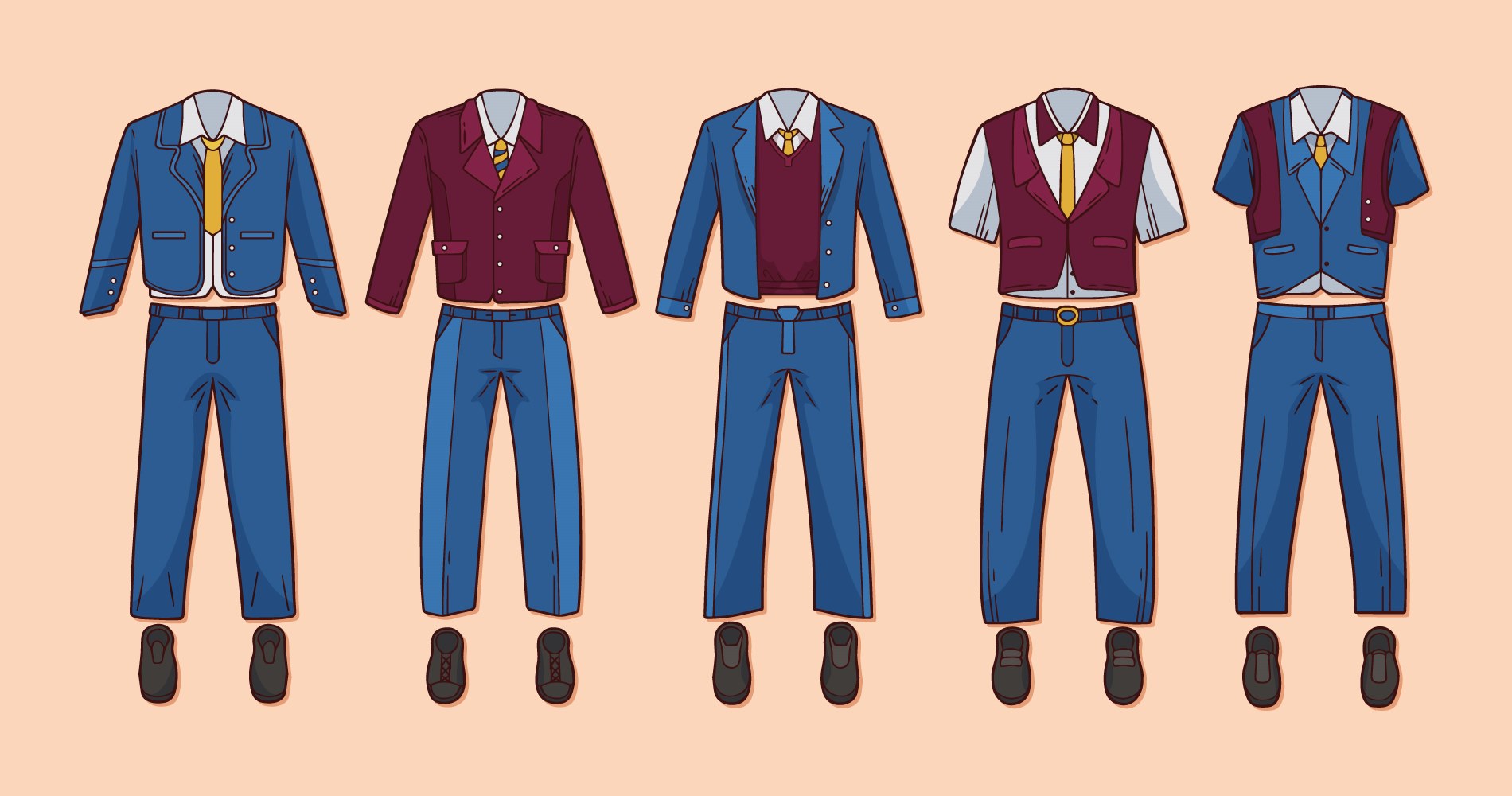
I often hear, “A suit is a suit.” That idea costs people respect at formal dinners. The room reads details fast, and the wrong details look loud.
A dinner suit is built for evening events, while a business suit is built for daytime work. The dinner suit uses cleaner lines, darker tones, and formal details like satin lapels.
What is the difference between a dinner suit and a business suit?
Here’s a quick comparison of a dinner suit vs business suit to help you choose the right outfit.
| Formal evening events, weddings, and award ceremonies | Dinner Suit (Tuxedo) | Business Suit |
| Purpose | Formal evening events, weddings, award ceremonies | Professional daytime work, meetings, office |
| Lapel | Satin shawl or peak lapel | Notch or peak lapel |
| Accessories | Bow tie, cummerbund, formal shoes | Standard tie, watch, belt, classic shoes |
| Fabric | Luxurious fabrics: satin, silk blends | Durable wool, cotton, blended fabrics |
| Color | Black, midnight blue, sometimes white | Black, navy, gray |
| Frequency | Rare, special occasions | Daily or frequent wear |
| Formality | High – black tie events | Medium – professional settings |
What Is a Business Suit?
A business suit is a versatile piece of clothing typically worn for professional settings. Whether it’s a business meeting, corporate event, or even semi-formal event, a
well-tailored business suit exudes confidence and sophistication without being too flashy.
Main features:
- Fabrics: Business suits are usually made of high-quality materials such as wool, cotton, and blended fabrics, which not only ensure the comfort of wearing but also reflect the texture of the garment.
- Color: The color of business suits is dominated by dark colors, such as black, dark blue, gray, etc., which gives people a stable and professional impression.
- Tailoring: Business suits usually adopt a simple and generous design, tailored to fit, focusing on practicality and comfort.
- Accessories: Business suits are often paired with shirts, ties, formal shoes, etc., and the overall match should focus on details and coordination.
When to Wear a Business Suit
Business suits are suitable for formal occasions, such as offices, meetings, interviews, business negotiations, and important business activities. It is not only suitable for traditional formal occasions, but also for professional occasions in the modern workplace.
What Is a Dinner Suit (aka Tuxedo)?
A dinner suit, more commonly known as a tuxedo, is designed specifically for formal evening events, especially those with a black tie dress code. It’s the attire of choice for events like gala dinners, weddings, and formal evening occasions. The dinner suit is meant to convey sophistication, formality, and a level of respect for the occasion.
Key Features: The Satin Distinction
The defining characteristic that separates a tuxedo from any other suit is the presence of silk. While a business suit is uniform in texture, a tuxedo relies on contrast between matte wool and lustrous facing.
- Satin Lapels: The lapels (whether Peak or Shawl) are faced with silk satin or grosgrain. This sheen is engineered to catch the dim, artificial light of chandeliers and candles, creating a focal point around the face.
Satin-Covered Buttons: Hardware is never exposed on a tuxedo. All buttons on the jacket and sleeves are covered in the same silk as the lapels to maintain a jewelry-like finish. - The Galon (Side Braid): A single stripe of silk runs down the outer seam of the trousers, elongating the leg line and concealing the structural seam.
When to Wear a Dinner Suit (Tuxedo)?
A Tuxedo is a formal evening dress, usually used for evening formal occasions, such as weddings, celebrations, award ceremonies, etc. It is a formal dress, suitable for those who need to wear a formal evening dress. It is a formal dress for evening events that require formal attire. Although tuxedos are worn in some very formal occasions such as state banquets and classical balls, they are not common in daily or business occasions. Therefore, a tuxedo is more suitable for specific formal occasions than for everyday or business occasions.
Key Differences Between Business Suit and Tuxedo
Understanding the technical distinctions in the business suit vs tuxedo debate is paramount. These are not merely stylistic suggestions but rigid sartorial rules that a skilled tuxedo tailor near me would strictly adhere to. Distinguishing these details ensures the correct garment is selected for the correct environment.
Time of Day and Event Appropriateness
The most fundamental difference is chronological. A business suit is a creature of the day; a tuxedo is a creature of the night.
- The Business Suit: Appropriate for daylight hours, office environments, and professional engagements. It is the standard for corporate events, luncheons, or daytime social gatherings.
- The Tuxedo: Strictly reserved for evening wear, typically after 6:00 PM or sunset. Wearing tuxedo formal wear before dark is historically considered incorrect. It is the mandatory uniform for galas, balls, opera premieres, and formal evening weddings.
Lapels, Buttons, and Fabric Finishes
Visual distinction relies heavily on texture and hardware construction.
- Lapels: Business suits for men almost exclusively feature “Notch Lapels” made of the same fabric as the jacket. A tuxedo, conversely, typically features “Peak Lapels” (sweeping upwards) or “Shawl Collars” (curved) faced in contrasting satin or grosgrain silk.
- Buttons: Business suits utilize exposed buttons made of horn, corozo, or resin. Tuxedo buttons are continually covered in the same silk fabric as the lapels to ensure a minimalist, jewelry-like appearance.
- Fabric: While both may utilize wool, tuxedo fabric is often a deeper, richer black or “midnight blue” designed to absorb artificial light. Business suits possess a matte finish intended to perform well under sunlight.
Accessories: The Non-Negotiables
The accompanying elements define the level of formality.
- Neckwear: A business suit is worn with a long necktie. A tuxedo rigidly requires a bow tie (preferably self-tied) in a fabric matching the lapels.
- The Shirt: A business suit pairs with a standard button-down or spread collar shirt. A tuxedo demands a formal evening shirt, often featuring a bib front (pleated or piqué/marcella), French cuffs, and holes for studs rather than exposed buttons.
- Shoes: Matte leather oxfords or loafers anchor a business suit. A tuxedo requires patent leather (high gloss) oxfords or opera pumps to complement the shine of the lapels.
Fit and Cut Differences
While both garments require precise tailoring, the intention behind the silhouette differs.
- Business Suit: Tailored for movement and comfort during a prolonged workday. It often allows slightly more ease for sitting at a desk or commuting.
- Tuxedo: Tailored for presentation. The cut is often sharper and closer to the body to enhance the “V” shape and suppress the waist more aggressively. The goal is to create a statue-like silhouette for photographs and formal entrances.
How to Style Your Dinner Suit and Business Suit
Styling a Business Suit
For a polished and professional appearance, your business suit should be worn with a white dress shirt, a silk tie, and cufflinks (optional). If you prefer a more contemporary look, a slim-fit or tailored cut adds a modern touch to your outfit. Business suits work best when paired with classic colors like navy blue, charcoal gray, or black, but don’t be afraid to incorporate softer shades like light gray or beige for more relaxed settings.
Styling a Dinner Suit
The dinner suit requires specific styling to achieve that perfect black tie look. It should be paired with a white dress shirt featuring French cuffs, shirt studs, and a black bow tie. For added elegance, the tuxedo should also include cufflinks, dress studs, and tuxedo pants with satin details that match the satin lapels of the jacket. The white dinner jacket option is a chic alternative for summer or tropical formal events, particularly when paired with black tuxedo pants for a striking contrast.
Choosing the Right Suit for Your Event
Ambiguity in invitations often leads to sartorial anxiety. Determining whether an occasion demands the daily armor of a business suit or the ceremonial elegance of a tuxedo is crucial for maintaining proper etiquette. The following guide delineates the correct attire for common scenarios.
A Guide to Occasion Appropriateness
The Corporate Event or Networking Dinner For professional settings, client dinners, or industry conferences, business suits for men remain the only appropriate choice. A dark navy or charcoal suit projects professionalism without appearing over-dressed. Wearing a tuxedo to a business function – even in the evening – can be perceived as pretentious or a misunderstanding of the event’s professional nature. To elevate a business suit for the evening, a white pocket square and a silk tie with a subtle sheen are recommended.
Conclusion
The distinction between a business suit vs tuxedo ultimately transcends mere aesthetics; it is a matter of respect for the environment and the occasion. The business suit serves as a functional tool for the professional day, characterized by matte wool, notch lapels, and a design engineered for the rigors of commerce. In contrast, the tuxedo stands as a ceremonial garment for the evening, defined by satin contrasts, the absence of functional hardware, and strict adherence to black-tie traditions.