How to Tell If Shortness of Breath Is From Anxiety
Shortness of breath can feel alarming. Many people immediately fear heart or lung disease. In reality, anxiety is a common cause of breathing difficulty. Understanding how to tell if shortness of breath is from anxiety can reduce fear, prevent unnecessary tests, and help you respond effectively when symptoms appear.
This guide explains anxiety-related shortness of breath, how it feels, how it differs from medical conditions, and when to seek help.
Understanding Anxiety-Related Breathing Problems
Feeling breathless during anxiety is one of the most common anxiety physical symptoms involving breathing. Anxiety changes how your nervous system controls respiration. Even when oxygen levels are normal, breathing can feel uncomfortable or insufficient.
Anxiety makes it hard to breathe because your body believes it is under threat. This can happen without lung problems, infection, or heart disease. Many people experience anxiety-related shortness of breath for the first time during intense stress, health anxiety, or panic.
How Anxiety Affects Breathing and the Nervous System
Fight-or-flight response and sudden breathlessness from stress
Anxiety activates the sympathetic nervous system. This fight-or-flight response prepares you for danger. Your breathing becomes faster and more shallow to fuel quick action. This sudden breathlessness from stress can feel intense and out of control.
Why breathing feels shallow when anxious
When anxious, people often breathe from the chest instead of the diaphragm. This leads to rapid, shallow breaths. Shallow breathing reduces carbon dioxide balance, which worsens air hunger and dizziness. This cycle reinforces anxiety breathing difficulty signs.
Anxiety causes chest discomfort without heart disease
Anxiety causes chest discomfort due to muscle tension, rapid breathing, and nerve sensitivity. Chest tightness anxiety symptoms often feel sharp, heavy, or squeezing. Despite how real it feels, this discomfort does not damage the heart.
Clear Signs Your Shortness of Breath Is Anxiety-Driven
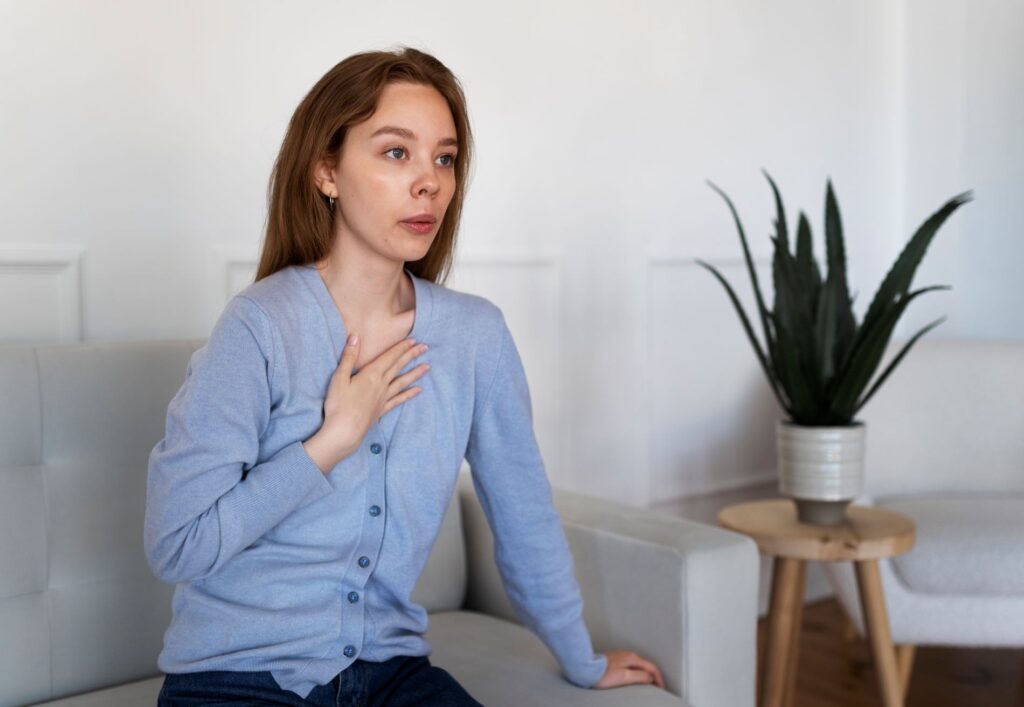
Symptoms appear during stress, worry, or panic
Anxiety-related shortness of breath usually begins during emotional distress. It may follow worrying thoughts, fear, or overstimulation rather than physical exertion or illness.
Breathing problems during panic attacks come on fast
Panic attack breathing symptoms often appear suddenly and peak within minutes. You may feel unable to get a full breath, even while breathing rapidly.
Shortness of breath improves with calm or distraction
If symptoms lessen when you relax, slow your breathing, or shift attention, anxiety is likely involved. Medical breathing problems rarely improve this way.
Normal test results despite breathing discomfort
Many people with anxiety undergo lung or heart tests that return normal results. Shortness of breath without lung problems is a strong indicator of anxiety-driven symptoms.
Shortness of breath without lung problems or infection
Anxiety-related breathing problems often occur without coughing, fever, wheezing, or mucus. This helps distinguish them from asthma, pneumonia, or bronchitis.
Anxiety vs Medical Causes of Shortness of Breath
Anxiety-related breathlessness patterns
Anxiety breathing difficulty often fluctuates. It may come and go, feel worse at rest, or increase when focusing on breathing. Symptoms may change throughout the day.
Lung and heart symptoms that feel different from anxiety
Medical conditions usually cause consistent or worsening symptoms. Heart-related shortness of breath often appears with exertion, swelling, or fainting. Lung disease often includes coughing, wheezing, or low oxygen levels.
When symptoms overlap and feel confusing
Anxiety vs asthma breathing issues can overlap. Asthma typically includes wheezing and responds to inhalers. Anxiety does not. If symptoms remain unclear, medical evaluation is essential for safety and reassurance.
Common Anxiety Conditions Linked to Breathing Issues

Generalized anxiety disorder often causes chronic breath awareness and frequent sighing. Panic disorder is strongly associated with breathing problems during panic attacks. Health anxiety increases attention to breathing sensations, amplifying discomfort.
Stress induced breathing problems are also common during burnout, grief, or prolonged emotional strain.
What Triggers Sudden Breathlessness From Anxiety
Emotional stress is the most common trigger. Fear, conflict, or traumatic memories can activate breathing symptoms instantly. Health anxiety and constant body monitoring increase sensitivity to normal breathing sensations.
Caffeine, nicotine, poor sleep, dehydration, and overstimulation can worsen anxiety and physical symptoms related to breathing by increasing nervous system arousal.
What Helps When Anxiety Makes It Hard to Breathe
Immediate breathing techniques to ease symptoms
Slow diaphragmatic breathing helps restore balance. Inhale slowly through the nose for four seconds. Exhale through the mouth for six seconds. This reduces hyperventilation and calms the nervous system.
Grounding strategies to calm the nervous system
Grounding shifts attention away from fear. Name objects you see, feel your feet on the floor, or use temperature changes. These techniques interrupt panic-driven breathing patterns.
Reducing shallow breathing patterns long-term
Practicing daily breathing exercises retrains your body to breathe efficiently. This reduces recurring anxiety-related shortness of breath over time.
Long-Term Ways to Prevent Anxiety-Related Shortness of Breath
Managing anxiety triggers is key. Cognitive behavioral therapy helps reframe fear-based thinking and reduces panic symptoms. Therapy is highly effective for breathing problems caused by anxiety.
Lifestyle changes also matter. Regular exercise improves breathing confidence. Limiting caffeine, prioritizing sleep, and practicing stress management support healthy breathing patterns.
When Shortness of Breath Is Not Anxiety

Some symptoms require urgent care. Severe chest pain, fainting, blue lips, confusion, or rapidly worsening breathing are not typical anxiety symptoms. Shortness of breath anxiety or heart problem concerns should always be evaluated if symptoms are new, severe, or different from usual patterns.
When to See a Doctor or Mental Health Professional
Seek medical care if shortness of breath is persistent, unexplained, or accompanied by physical warning signs. Once medical causes are ruled out, a mental health professional can help treat anxiety-related shortness of breath effectively.
Getting the right diagnosis builds trust in your body and reduces fear-driven symptom cycles.
Key Takeaways on Anxiety and Shortness of Breath
Anxiety can cause real and distressing breathing symptoms without physical disease. Understanding how anxiety affects breathing helps you respond calmly and confidently. With proper techniques, support, and reassurance, anxiety-related shortness of breath is manageable and reversible.