
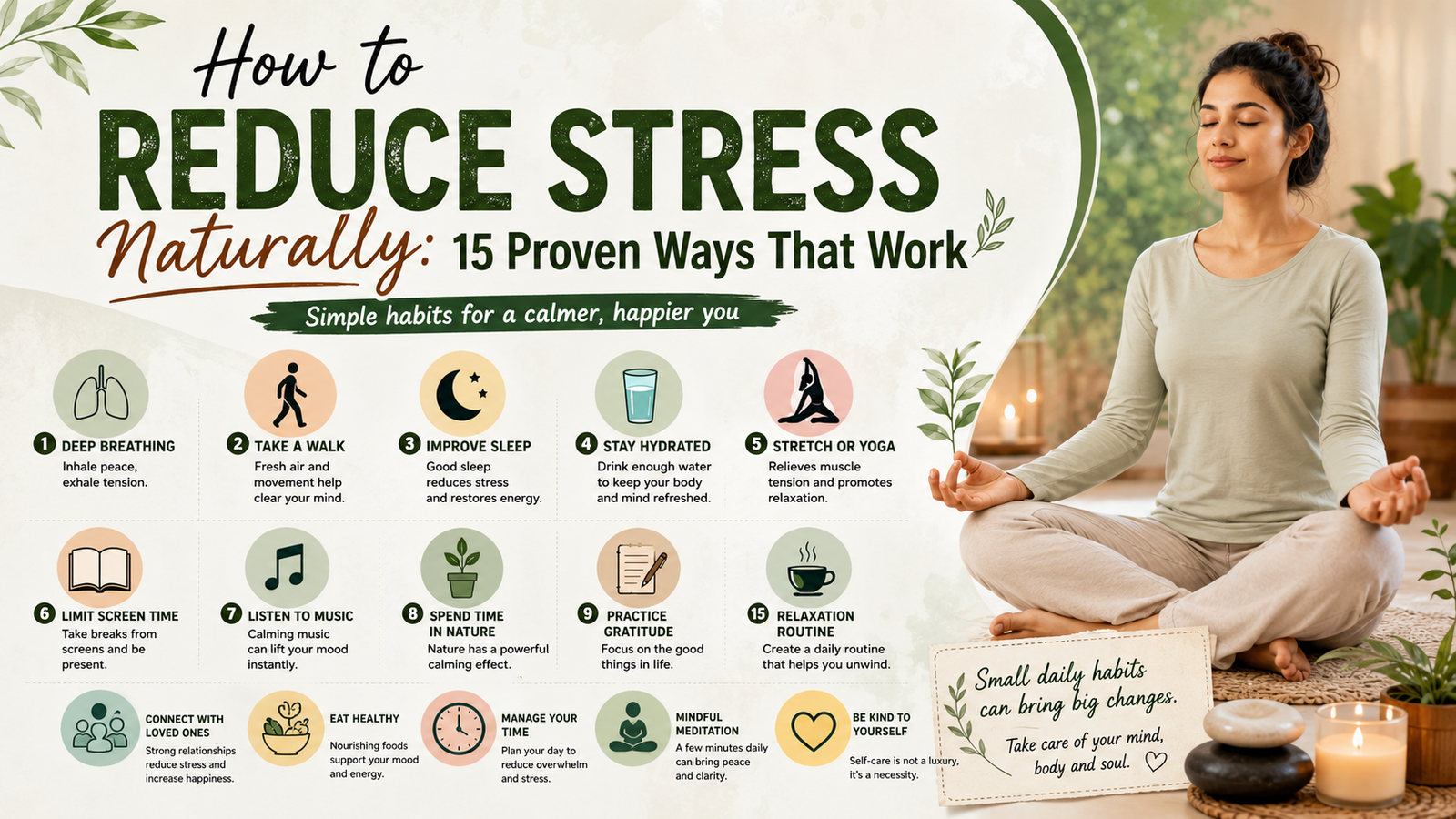
How to Reduce Stress Naturally: 15 Proven Ways That Work
Stress is something almost everyone deals with, whether it comes from work deadlines, family responsibilities, or simply the pace of everyday life. Learning how to reduce stress naturally doesn’t require expensive treatments or complicated routines—small, consistent changes to your daily habits can make a real difference. From moving your body to spending time outdoors, natural stress relief methods work by calming your nervous system and giving your mind a break from constant pressure. In this article, you’ll find 15 practical, science-backed ways to lower stress levels, improve your mood, and feel more in control of your day. Let’s look at what actually works.
Be Active
Physical movement is one of the fastest ways to release built-up tension. When you exercise, your body produces endorphins—natural chemicals that improve mood and reduce feelings of anxiety. You don’t need an intense workout to see results; even a 20-minute walk, a short bike ride, or light stretching can lower cortisol levels and clear your head. The key is consistency. Try to build movement into your routine a few times a week, whether that’s dancing in your living room, gardening, or taking the stairs instead of the elevator. Over time, regular activity becomes one of the most reliable tools for managing daily stress.
Try Journaling
Writing down your thoughts is a simple but powerful way to process emotions instead of letting them build up. Journaling gives you space to unpack what’s bothering you, spot patterns in what triggers your stress, and work through problems on paper rather than replaying them in your head. You don’t need to write pages every day—even five minutes of jotting down how you feel or what’s on your mind can create mental clarity. Some people prefer gratitude journaling, listing a few positive things each day, while others use it to vent frustrations. Either approach helps release pent-up emotions in a healthy way.
Practice Mindfulness
Mindfulness means paying full attention to the present moment without judgment. Instead of worrying about what happened earlier or what might happen next, mindfulness trains your brain to focus on right now. This shift reduces the mental loop of overthinking that often fuels stress. You can practice mindfulness through meditation apps, guided breathing sessions, or simply pausing during the day to notice your surroundings—the sounds around you, the way your feet feel on the ground, or the taste of your food. Even a few minutes of mindful awareness daily can lower stress hormones and improve emotional regulation over time.
Practice Deep Breathing
When you’re stressed, your breathing often becomes shallow and fast, which signals to your brain that something is wrong. Deep, slow breathing does the opposite—it activates your parasympathetic nervous system, the part responsible for calming your body down. Try inhaling slowly through your nose for four counts, holding for four counts, and exhaling for six counts. Repeat this a few times whenever you feel overwhelmed. This technique is one of the quickest ways to reduce stress naturally because it works almost instantly, making it useful before a big meeting, during a tense conversation, or right before bed.
Eat a Balanced Diet
What you eat directly affects how your body handles stress. Diets high in processed sugar and refined carbs can cause blood sugar spikes and crashes, which often worsen anxiety and irritability. On the other hand, a balanced diet rich in nutrients helps stabilize mood and energy throughout the day. Aim to include a mix of protein, healthy fats, and complex carbohydrates in your meals, along with plenty of fruits and vegetables. Staying hydrated matters too, since even mild dehydration can increase feelings of tension and fatigue.
Meals with Whole Foods
Whole foods—like vegetables, whole grains, lean proteins, and nuts—provide steady energy without the crashes that come from processed snacks. Foods rich in magnesium, such as leafy greens and almonds, and omega-3 fatty acids, found in fish like salmon, have been linked to lower stress levels. Building meals around whole, minimally processed ingredients supports both your physical health and your mental resilience, making it easier to handle daily pressures.
Reduce Your Caffeine Intake
Caffeine can boost alertness in small amounts, but too much of it often increases anxiety, disrupts sleep, and makes you feel jittery. If you notice your heart racing or your mind feeling scattered after coffee, it may be contributing to your stress rather than helping it. Try cutting back gradually rather than quitting all at once to avoid withdrawal headaches. Pay attention to how your body responds and adjust your intake based on how you feel throughout the day.
Coffee Alternatives
If you’re looking to cut back, herbal teas like chamomile or peppermint offer a calming ritual without the caffeine crash. Green tea contains a small amount of caffeine paired with L-theanine, an amino acid known to promote relaxation. Decaf coffee, warm lemon water, or golden milk are other gentle alternatives that let you keep your routine while reducing overall stimulant intake.
Spend Time with Loved Ones
Social connection is a natural stress buffer. Talking to friends or family, even briefly, can help you feel supported and less alone in whatever you’re facing. Sharing your worries with someone you trust often makes problems feel more manageable, and simply laughing or catching up with someone close to you can shift your mood. Make time for meaningful conversations, whether in person, over the phone, or through a quick video call, especially during busier or more stressful periods.
Spend Time with a Pet
Spending time with animals has a genuine calming effect on the body. Petting a dog or cat can lower cortisol levels and increase oxytocin, the hormone associated with bonding and relaxation. Pets also encourage routine and physical activity, whether it’s walking a dog or simply playing with a cat, both of which contribute to lower stress. Even a few minutes of cuddling or interacting with a pet can offer a quick emotional reset during a hectic day.
Spend Time in Nature
Being outdoors, even for a short while, has been shown to reduce stress hormones and improve overall mood. Natural environments—parks, forests, beaches, or even a backyard garden—help slow down racing thoughts and offer a break from screens and noise. Try to spend time outside daily, whether it’s a walk during lunch, sitting outdoors while you have your coffee, or a weekend hike. Fresh air and natural light both play a role in resetting your mind and improving focus.
Have Some “Me Time”
Constantly giving to others without taking time for yourself can quietly build up stress. Carving out personal time, even just 15–20 minutes a day, allows you to recharge. This might mean reading, taking a bath, listening to music, or simply sitting quietly without distractions. “Me time” isn’t selfish—it’s necessary for maintaining emotional balance and preventing burnout, especially if your days are filled with responsibilities toward work, family, or others.
Create Boundaries and Learn to Say No
Overcommitting yourself is one of the most common causes of chronic stress. Learning to say no to tasks or requests that overwhelm your schedule protects your time and energy. Setting clear boundaries at work and in personal relationships isn’t about being difficult—it’s about being realistic regarding what you can handle. Start small by declining low-priority requests, and communicate your limits clearly and calmly. Over time, this habit reduces the pressure of trying to do everything for everyone.
Avoid Unhealthy Habits
When stressed, it’s tempting to reach for quick fixes like alcohol, smoking, or excessive junk food, but these habits often make stress worse in the long run. They may offer short-term relief while disrupting sleep, mood, and energy levels afterward. Instead, try replacing unhealthy coping mechanisms with healthier alternatives, such as a short walk, a phone call with a friend, or a few minutes of deep breathing. Recognizing these patterns is the first step toward breaking them.
Try to Be Positive
Your mindset plays a major role in how you experience stress. Focusing on solutions rather than dwelling on problems can shift your entire outlook. This doesn’t mean ignoring difficulties, but rather approaching them with a constructive attitude. Practicing gratitude, celebrating small wins, and reframing setbacks as temporary rather than permanent can all help reduce the emotional weight of stress. Over time, a more positive outlook makes daily challenges feel less overwhelming and more manageable.
Final Thoughts
Knowing how to reduce stress naturally comes down to building small, sustainable habits into your everyday routine. You don’t need to try all 15 methods at once—start with one or two that feel realistic for your lifestyle, whether that’s a daily walk, a few minutes of deep breathing, or spending more time with people and pets you love. Over time, these small changes add up, helping you feel calmer, more focused, and better equipped to handle whatever comes your way.